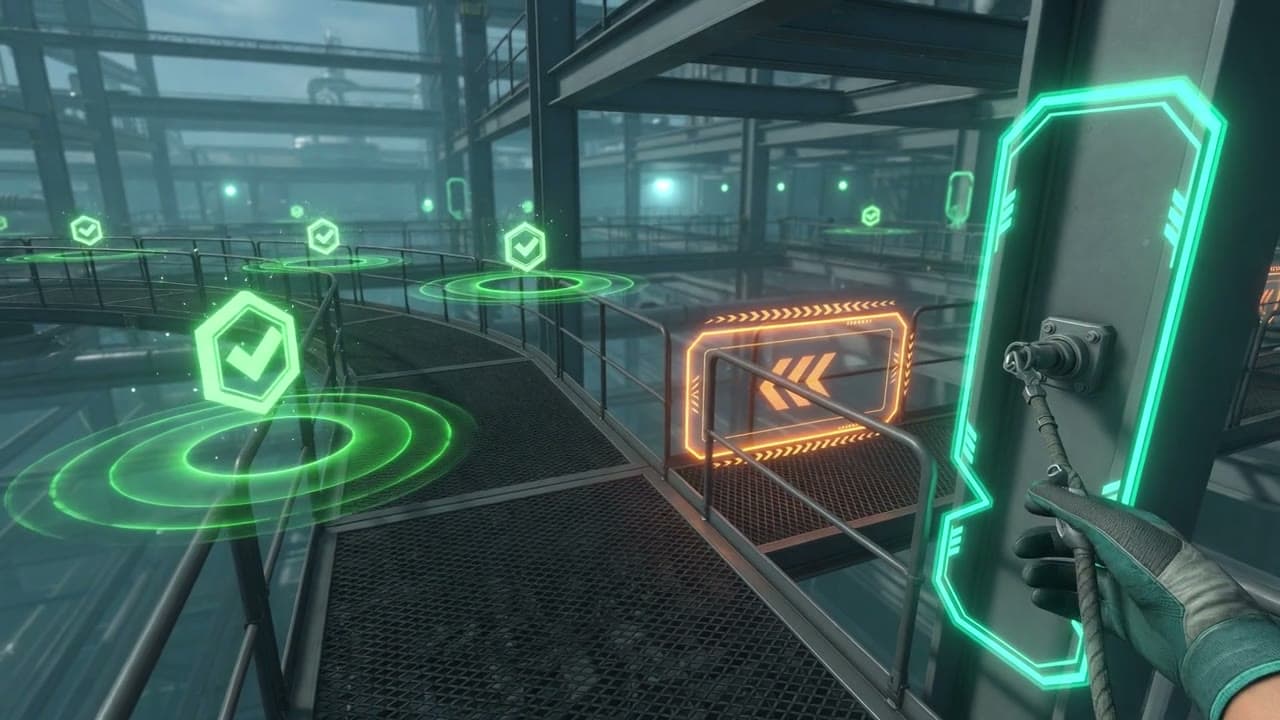
Industrial safety simulator · Web & VR · Mexico
Working-at-heights simulator: practice the risk, without the risk.
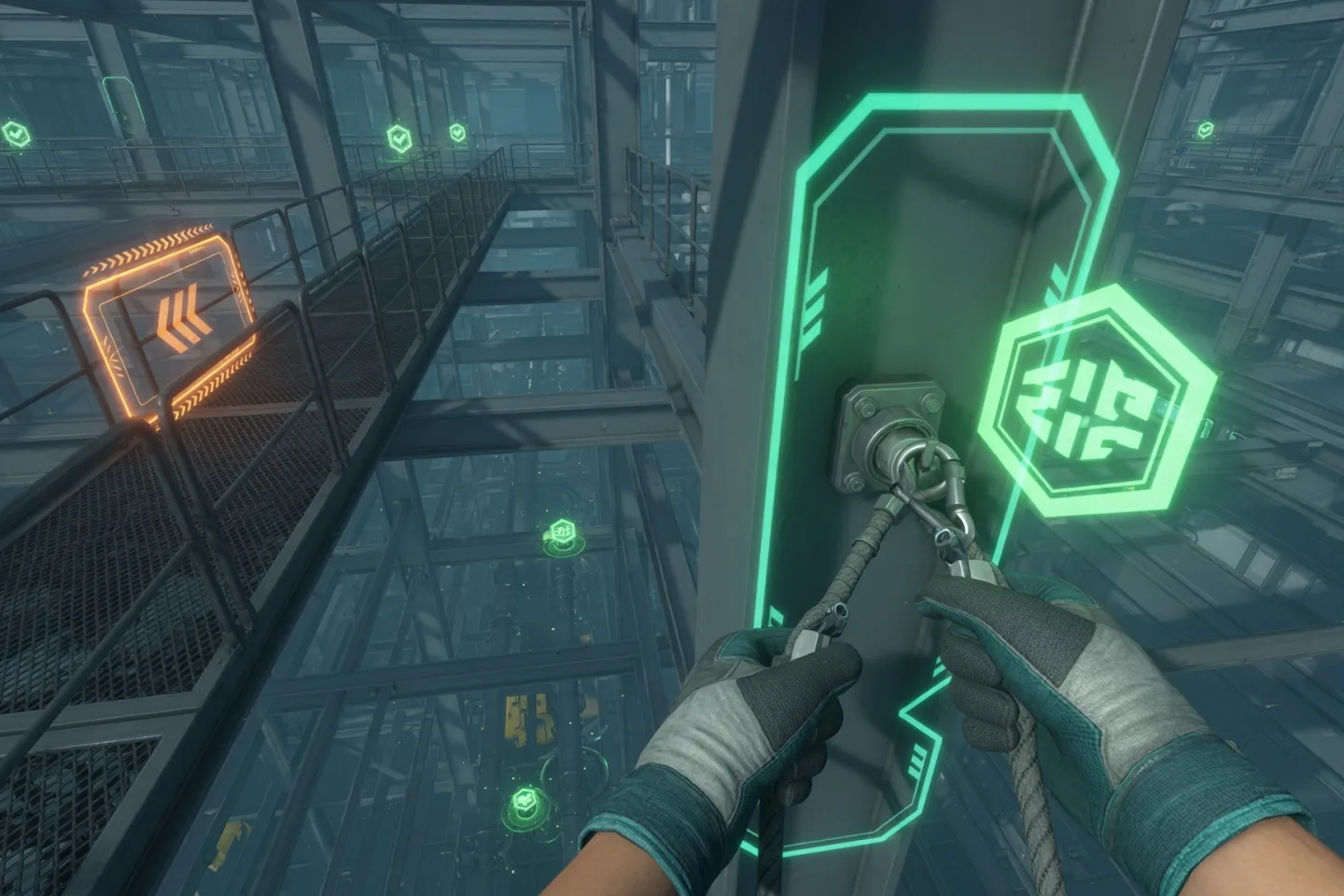
A WASD Studio working-at-heights simulator trains falls, rescue, harness inspection and anchoring and the NOM-009-STPS protocol on the web (no headsets) and in VR, with per-operator metrics. It's built by the studio whose picking simulator for Coca-Cola FEMSA cut errors by 44% and training time by a third, and whose VR program with Alsea has run continuously for 6 years. It starts with a scoped pilot, in weeks; quote within one business day.
Reply within one business day · No commitment
TRUSTED BY THE MOST DEMANDING ENTERPRISES IN MEXICO





Training at real height exposes people to the very risk you're trying to avoid
Real working-at-heights training means putting people on structures, pausing activities and coordinating instructors and gear — and even then, the most critical part (a fall, a rescue) can't truly be practiced. With theory and videos, nobody knows who has mastered the protocol until they're already up there.
- Practicing at real height exposes the worker while they're still learning.
- Stopping operations to train costs production every single time.
- Falls and rescues can't be rehearsed in the real world; in the simulator, as many times as it takes.
Practice falls, rescue, harness use and hazard detection — without climbing anything.
Per-operator metrics: errors, timing and protocol adherence, visible to the supervisor.
Documented practice that complements your NOM-009-STPS compliance.
What the working-at-heights simulator is
An interactive 3D environment where each operator practices the critical moments of work at height: equipment inspection, harness fitting and anchoring, hazard detection, responding to a fall and rescue maneuvers. Every session records what they did, how long it took and which errors they made — the supervisor sees performance per operator, not an attendance sheet.
Web first, VR when it fits
The web version runs in the browser of the computers or tablets you already have on site: no mandatory headsets, no installs, ready to train many operators at once. When you want full immersion —feeling the height, the harness, the urgency of a rescue— the same content deploys to VR.
How it aligns with NOM-009-STPS
NOM-009-STPS regulates work at height in Mexico. The simulator complements your compliance program: repeatable practice of the procedures plus objective evidence per operator. The DC-3 certificate is still issued by your registered training agent — the simulator documents and reinforces the practice, it does not replace certification.
What results have your simulators delivered?
The ones our clients publish, with a name and a number. These are programs in operation, not demo pilots:
- Coca-Cola FEMSA — in the picking simulator wired to real ERP orders: 44% fewer picking errors and a third less training time (published case, linked at the end of this page). Across training programs with Coca-Cola FEMSA: 65% productivity improvement.
- Alsea — VR training program for the group's brands: 85% retention and 35% lower turnover in the teams trained; 6 years in continuous operation and more than 3,000 people trained.
Which risks does it cover, and under which standard?
This simulator covers work at height (NOM-009-STPS). With the same engine, the same per-operator measurement and the same web or VR deployment we build custom scenarios for the other critical plant risks, each aligned to its Mexican standard:
- Work at height — NOM-009-STPS: equipment inspection, anchoring, fall and rescue (this simulator).
- Forklifts and material handling — NOM-006-STPS: safe operation, loads, routes and pedestrians.
- Lockout/tagout (LOTO) — NOM-004-STPS: isolating energy sources before servicing machinery.
- Confined spaces — NOM-033-STPS: permits, atmosphere testing, attendant and rescue.
- In every case the DC-3 certificate is issued by your registered training agent; the simulator provides the practice and the per-operator evidence.
How is it contracted: project, license or rental?
The model is defined in the quote based on how many people rotate through the training each year: a custom project (the simulator becomes your company's asset), a per-site or per-period license of already-developed content, and headset rental for the rollout when you'd rather not buy them. A scoped pilot —one scenario, one site— is the fastest way to start and to have the number that justifies the program to EHS and leadership.
Coca-Cola FEMSA
Simulator training already operating at enterprise scale.
- 44% fewer picking errors with Coca-Cola FEMSA's simulator.
- One-third less training time.
- Tens of thousands of employees trained, without stopping operations.
What we value most about WASD Studio is their capacity for technological innovation. They've made training management with our internal teams enormously easier — something that used to be quite complex to coordinate.
The quality of the service and the experience we built together were excellent; they made a great impact on our people.
How much does a working-at-heights simulator cost?
It depends on three things: how many scenarios it includes (inspection, anchoring, fall, rescue…), whether it deploys on the web, in VR or both, and what gets measured and integrated (LMS, dashboards). That's why we quote by scope and start with a scoped pilot of one scenario at one site, which is the fastest way to have the number. Quotes go out within one business day.
Does the simulator replace the DC-3 certificate?
No. The DC-3 is issued by your registered training agent. The simulator complements compliance: repeatable practice of NOM-009-STPS procedures and per-operator evidence (errors, timing, protocol adherence) that documents your training program.
Do we need VR headsets?
No. The web version runs in the browser of the computers or tablets you already have on site. VR is an option when you want full immersion, not a requirement to get started.
How long does implementation take?
We work in iterations: a first functional module in weeks, not months, validated with your safety supervisors before scaling to more scenarios or sites.
What exactly does it measure?
Errors, timing and protocol adherence per operator and per exercise: equipment inspection, harness use, hazard detection and rescue maneuvers. Everything is recorded as evidence for your internal program.
Get a quote for your working-at-heights simulator.
Tell us your training challenge and we’ll get back to you within one business day.
Reply within one business day · No commitment
Prefer a direct conversation?
Message us on WhatsApp